There is a version of this story that starts in the Octagon, under the white lights, with a strawweight in Entram colors checking her gloves one more time. That version is fine. It is also incomplete. The real beginning is smaller and meaner: a fifteen-year-old in Baja who got tired of being picked on, walked into a martial-arts room because the world outside it felt unsafe, and discovered that fear, once you learn its shape, can be rewritten as work.

She is twenty-seven now. She fights out of Tijuana. The ledger reads eleven and two. Seven of the wins ended with somebody else not wanting any more of her hands. She has held a UWC Mexico strawweight strap. She won Combate's Last Latina Standing tournament the hard way — quarter, semi, final, same-night energy, finishes where finishes were available. She has already been nominated for a UFC debut of the year. ESPN called her the women's rookie of 2022. None of that is the part that sticks when you talk to people who actually know the corridor. The part that sticks is simpler: she is still here.
The Apex does not care who you were at fifteen. Entram does. That is why she trains there.
Rosarito, then the room
Born Yazmin Yazareth Gutiérrez Jauregui on the last day of February, 1999, she carries Rosarito in the birth record and Tijuana in the walking-around life. The border is not a metaphor in this story; it is geography. You can stand at Playas and watch the fence walk into the Pacific like a stubborn idea. You can drive inland and hit the gyms that feed the whole San Diego–Tijuana fight economy. Entram sits in that economy the way a spine sits in a body — not the loudest building on the block, just the one the serious people keep returning to.
She started around 2014 because school had teeth. Bullying is a soft word for what it feels like when you are fifteen and the day has already decided you are prey. Combat sports did not erase that. They gave her a different contract with her own body: show up, get hit, hit back, leave different than you arrived. She fell in love with the contract. Heroes, when she is asked, are not posters on a wall. Mom. Dad. Grandmother as the quiet superhero. If you want the sentimental version, stop there. If you want the real one, keep going — because the sentimental version does not explain how a waitress who also taught kidnapping-prevention classes to minors becomes a woman who can clear a Combate bracket and then walk into the UFC.
The job before the job
Before the Octagon paid anything that looked like a living, she worked. Waitressing. Then work that sounds almost invented until you remember what the border corridor actually asks of families: teaching kids how not to get taken. That detail is not color. It is character. The same nervous system that scans a school hallway for trouble later scans an opponent for openings. Hypervigilance, aimed correctly, is a skill. Aimed incorrectly, it is a wound. She aimed it at pads, sparring partners, and eventually at women who also wanted something badly enough to bleed for it.
She says she is a mother now, and that the work is hard, which is the least dramatic true sentence in combat sports. She runs a coffee shop she built with effort she will not romanticize. Discipline, God, small wins that keep the next day possible. Instagram will give you the highlight reel if you want it; this page will not. The point is the double life every corridor fighter eventually learns: the glamorous night is rare. The morning shift is not.
How the record got loud
Professional in 2018. Elbows early. Knockouts that arrived like bad news for the other corner. Combate made her a name across the Spanish-language fight audience; UWC made her a champion in her own backyard. By the time the UFC called, she was not a mystery. She was unfinished business with a highlight reel.
San Diego, August 2022 — debut night against Iasmin Lucindo, a fight that looked like a car crash filmed in high definition. She won the decision and the room. Orlando, December — Istela Nunes, second-round stoppage, the hands finally matching the reputation. Then the sport did what the sport does. Denise Gomes needed twenty seconds at UFC 290. The internet wrote its essays. Jauregui went home, trained, and came back to Mexico City in February 2024 to take a unanimous decision over Sam Hughes in front of the country that keeps score with its throat.
September 2024, UFC 306, the Sphere weekend that sold Mexico to the world in neon. Ketlen Souza found the back. Rear-naked choke. First round. That is the loss. Live with it the way fighters live with losses: as data, not as identity. (A public UFC results badge elsewhere has argued with its own prose on that night; the body language of the finish was not ambiguous. She was submitted. The draft on this desk will not pretend otherwise.)
Saturday: Demopoulos, Apex, no poetry required
UFC Fight Night 289 — September 26, 2026 — Meta APEX, Las Vegas. Vanessa Demopoulos across the cage. Strawweight. Prelims energy. Demopoulos is the veteran with the nickname that sounds like a comic-book warning and a record that has lived more lives than most highlight clips. Jauregui is the sharper recent athletic profile with rust on the calendar and a chip that does not need manufacturing. Two years since the last walk. That is a long time in a division that eats inactivity for breakfast.
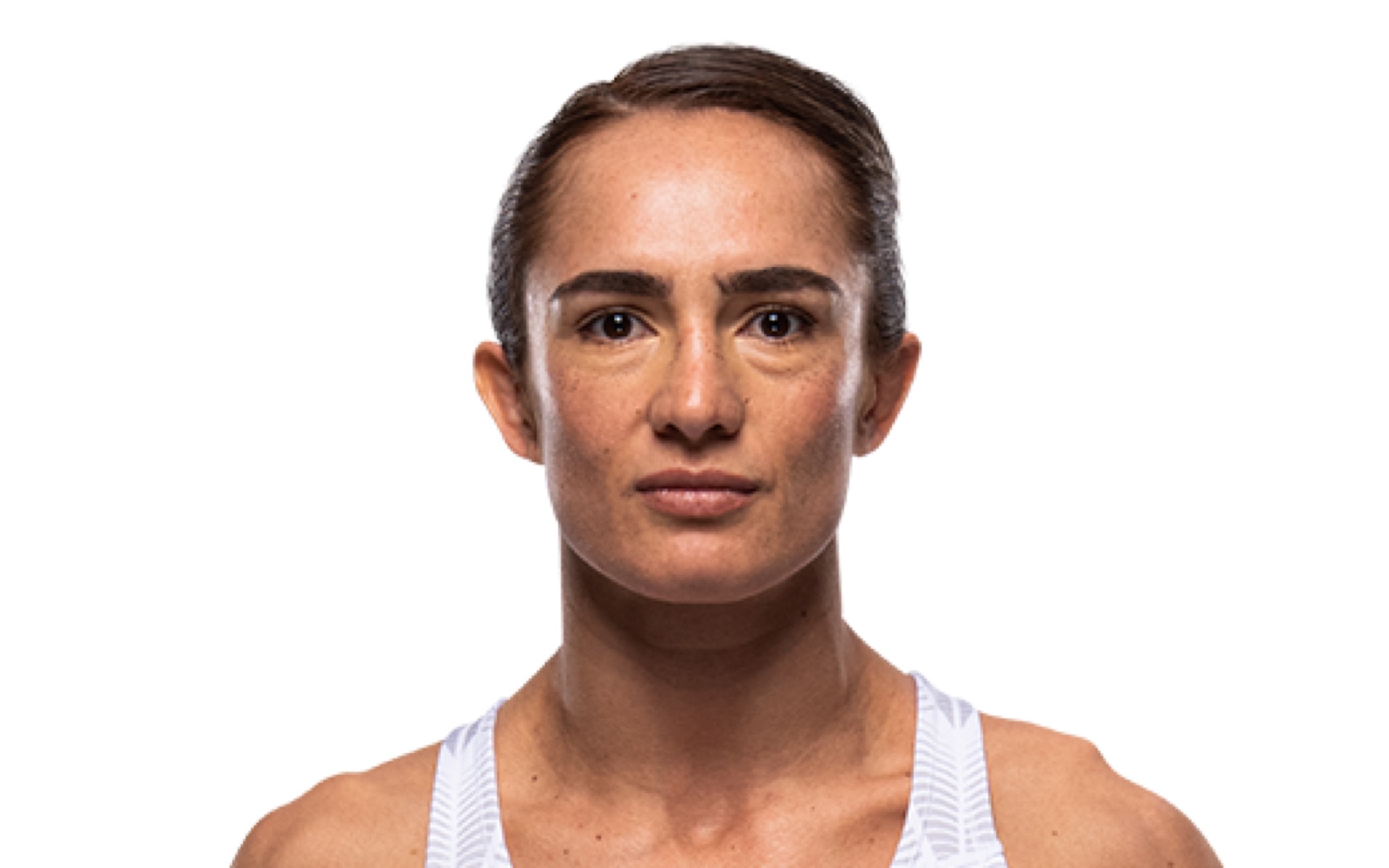

What does she bring into that cage? Freestyle violence with a boxing-and-kicks first language, an armbar and anaconda in the back pocket, a BJJ black belt she earned the long way, and a gym — Entram — that already taught a generation how to turn Baja mornings into world titles. Brandon Moreno's old house does not hand out soft sparring. If you leave that room average, you were average when you arrived.
She does not need a new origin story. She needs five honest minutes and a referee who stays out of the way.
The fun part — and there is a fun part, even in a sport built on damage — is watching a fighter who has already survived the movie's second act. The bullying kid. The waitress. The prevention teacher. The tournament killer. The debut darling. The twenty-second nightmare. The home-country decision. The Sphere submission. The coffee shop. The daughter. Now the Apex again. That is not a bullet list. That is a person. Saturday does not ask her to be inspiring. It asks her to be dangerous. Those two things have been the same person for a long time.
The board (edition 2026)
When the walkout song hits and the camera finds her face, remember the smaller room first: the one where a teenager decided the bully would not get the last word. Everything after that — the strap, the tournament, the debut, the losses, the long layoff, the Apex — is just the echo getting louder.
More from the corridor
- Entram GymThe Tijuana room that keeps minting corridor fighters.
- Border pipelineHow the San Diego–Tijuana lane feeds the big shows.